

Energy shock from Middle East war may lift US inflation to 4.2% this year; OECD warns of weaker global growth – The Times of India


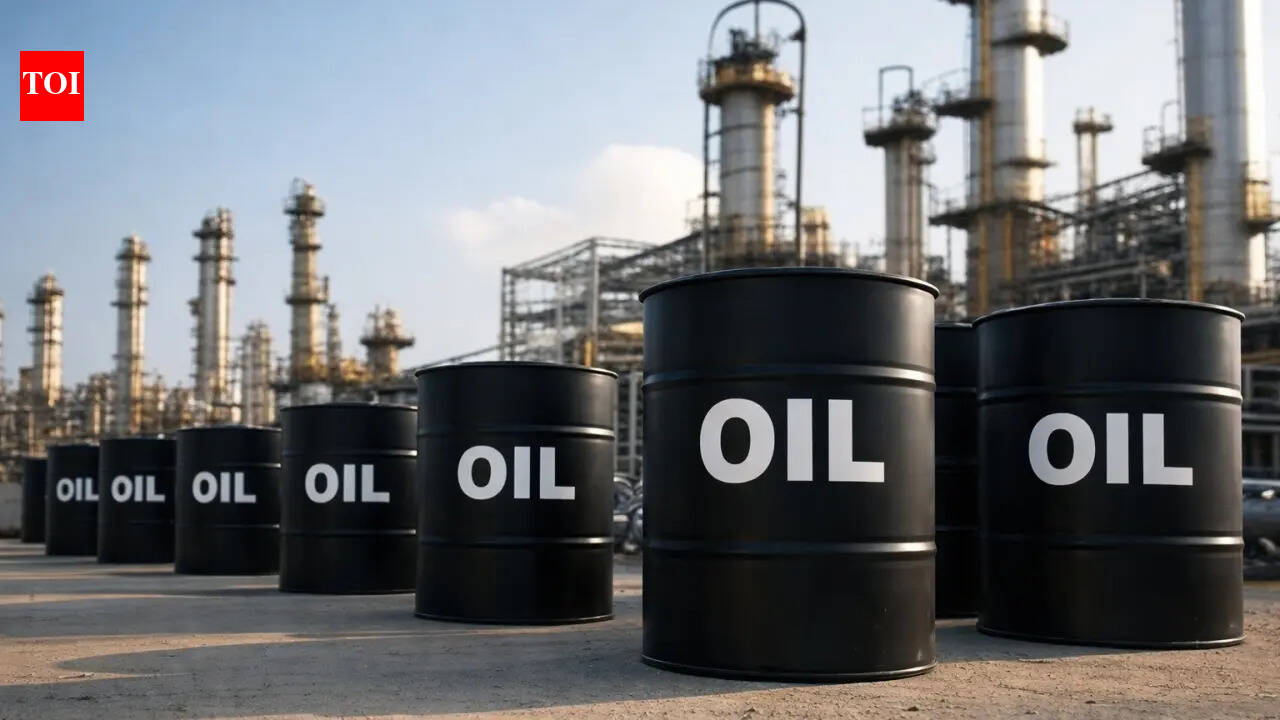
The escalation of the Middle East conflict could push US inflation to 4.2% this year–the highest among G7 economies– while also slowing global growth, the Organisation for Economic Cooperation and Development (OECD) has said, underlining the widening economic costs of the US-Israel war with Iran, the Financial Times reported.In its interim economic outlook, the Paris-based body cautioned that rising oil and gas prices triggered by disruptions to energy exports are likely to increase inflation across major economies and create “significant downside risks” to global expansion if the conflict intensifies.The OECD expects US inflation to climb sharply from 2.6% in 2025, with countries such as China, South Korea and India also facing stronger price pressures due to the energy shock. “The breadth and duration of the conflict are very uncertain, but a prolonged period of higher energy prices will add markedly to business costs and raise consumer price inflation, with adverse consequences for growth,” it said.The report projected that higher living costs could weigh on US household spending and slow economic momentum. US growth is forecast to ease to 2% this year and further to 1.7% in 2027.Globally, economic activity is also expected to moderate. The OECD said world GDP growth could slow from 3.3% last year to 2.9% in 2026, before recovering slightly to 3% in 2027.Earlier in the year, the global outlook had appeared more resilient, supported by strong investment in artificial intelligence and buoyant equity markets. However, the conflict that began with US and Israeli strikes on Iran in late February has pushed up energy prices and triggered ripple effects across commodities including metals and fertilisers.The organisation noted that the resilience of the global economy is now being tested, particularly because of the strategic role of the Strait of Hormuz, which typically handles about one-quarter of global seaborne oil trade and one-fifth of liquefied natural gas shipments.Supply-chain risks have also increased. Gulf countries account for 34% of global urea exports and roughly half of sulphur exports, while the Middle East produces more than one-third of global helium and two-thirds of bromine, both vital for industrial uses including semiconductor manufacturing.“A prolonged period of disruption could also result in the emergence of significant energy shortages that would lower growth further,” the OECD warned.The outlook indicates that earlier improvements in global growth projections have been reversed. Indicators at the start of the year had pointed to a 0.3 percentage point upward revision in global GDP forecasts, but the conflict has effectively erased that boost.Inflation projections have also been revised higher. The OECD now expects headline inflation in the G20 to reach 4% in 2026, an increase of 1.2 percentage points compared with its December forecast, and 2.7% in the following year.Growth prospects in Europe remain subdued, with the eurozone economy projected to expand by 0.8% this year before improving to 1.2% next year.In the US, the organisation said weakening household demand could reduce growth momentum heading into 2026. Despite the inflation risks, it expects the Federal Reserve to keep interest rates unchanged, while the European Central Bank may implement a single rate increase.Members of the US Federal Open Market Committee (FOMC) still anticipate rate cuts this year, although Federal Reserve chair Jay Powell has acknowledged that forecasts have become more uncertain because of geopolitical tensions.The FOMC recently raised its projections slightly, saying headline and core personal consumption expenditures inflation may end the year at 2.7%, compared with earlier estimates of 2.4% and 2.5%. It also lifted its US growth forecast for this year to 2.4% from 2.3%, citing productivity gains.The OECD’s inflation outlook is significantly higher than that of the Federal Reserve and many private forecasters, reflecting expectations of a more persistent energy price shock and continued effects from earlier US tariff increases. It also suggested that the US economy may already be operating under capacity constraints linked to lower immigration.In a downside scenario where oil prices average around $135 per barrel in the second quarter, the OECD estimates global output could be 0.5 percentage points lower than its baseline forecast, while consumer prices could be nearly 1 percentage point higher.While some countries are considering emergency support for households facing higher energy bills, the OECD said such measures should be “well-targeted” towards the most vulnerable households and financially viable firms.
Source link