

The science of the sniff test: Why your towels stay musty and how to break the cycle | – The Times of India

There is nothing worse than emerging from a shower after washing yourself clean and reaching for a freshly laundered towel only to be greeted with an unpleasant whiff of something foul. It’s that distinctive smell of something mouldy and dank, and not even the most powerful detergent can mask it. It’s a common experience in many homes, and the source of the issue is always attributed to either the machine or the person’s washing process.Although it is a refreshingly new experience, biology takes place in the laundromat too. This time, the towel turns into an arena where competing colonies of bacteria form their microcosms within its fibres. Regardless of it being cleaned and smelling good, some bacteria have become adapted to survive the procedure itself, meaning that they can resist both the insufficient temperature of the water and the mildness of the detergent applied. In addition to staying alive, they can produce gas byproducts during their metabolic processes.How washing machines affect odorous bacteriaDespite the name “germ graveyard” sometimes being attributed to washing machines, they do not necessarily kill everything due to another biological term called microbial homogenization. In a study titled Impact of antibacterial detergent on used-towel microbiomes at species-level and its effect on malodor control authors reveal that bacteria can become mixed up in such large quantities in the process of cleaning towels. Prior to cleaning, there can be completely different bacteria in towels.The researchers found that bacteria from one towel travel through the wash water to colonise every other item in the drum. This means that if just one towel in your load has odour-causing bacteria, the entire batch will likely come out smelling the same way. The study identified specific culprits like Moraxella osloensis and Acinetobacter junii as the primary producers of malodor. These hardy species specialise in breaking down sweat and skin cells to produce sulfur-containing compounds, which are responsible for that pungent, sour scent we all recognise.What this research demonstrates is the reason why simply “washing more” is frequently ineffective. In case bacteria do not get eliminated, they simply transfer from one location to another. The discovery of this experiment reveals that antibacterial detergents perform better compared to regular ones since they change the charge of bacteria and, therefore, facilitate their elimination by the soap.The invisible threat of detritus created by too much detergentGenerally, people believe that more soap guarantees a cleaner effect, but this assumption may prove incorrect if a person uses excessive amounts of detergent. The high efficiency of modern washing machines requires less water for clothes; thus, using a lot of liquids makes rinsing of towels difficult, leaving some residue inside the fabric fibres. Such detritus can serve as a perfect habitat for bacteria.
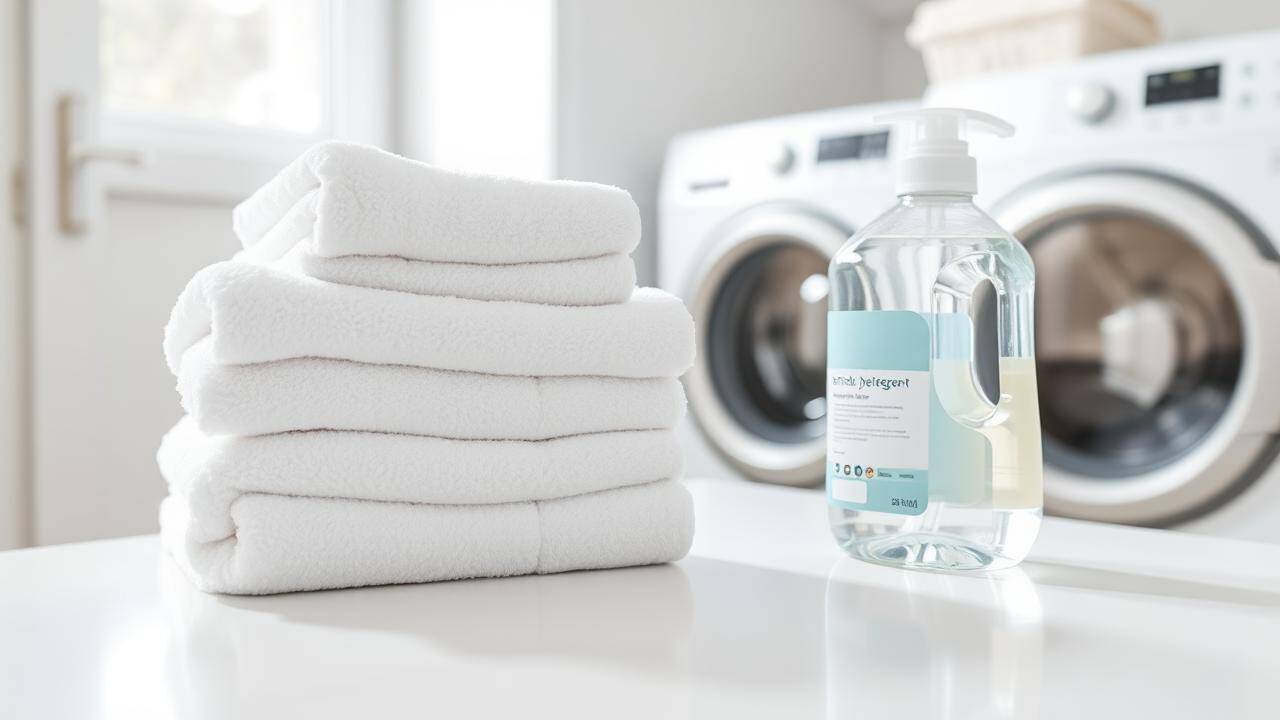
To combat this, use antibacterial detergents, clean your machine regularly, and hang towels to dry after each use to ensure lasting freshness.
A compelling piece of research published in the Journal of Allergy and Clinical Immunology looked at what happens when these chemicals stay on our fabrics. The study found that detergent residues can actually compromise the protective barriers of human cells. Specifically, the residue can cause leakage in the epithelial barriers, which are the body’s first line of defence.However, this could prove bothersome for those with allergic reactions or respiratory conditions such as asthma. The scientific literature confirms that even minimal amounts of diluted soap can damage cellular structure and activity. As a result, the process of rinsing becomes just as critical as washing to avoid the accumulation of detergents in towels, which might lead to unpleasant odour and irritation.Steps for prolonged freshnessIt is unnecessary to invest in new machines to revive your towels. Here are some actionable ideas instead. Firstly, opt for an antibacterial detergent or laundry sanitiser. Both items are intended to fight bacteria responsible for generating sulfur compounds. Another crucial action is regular cleaning of your washing machine. It should be conducted monthly.A good tip that will help, too, is getting rid of the practice of dropping your wet towels in a heap either in your laundry basket or on the floor. This is because the moisture attracts bacteria. Therefore, hang them out to dry after each use. When washing, make sure not to overcrowd the machine, as this will interfere with the washing process.Knowing about the microbiology in your laundry area will enable you to appreciate the pleasant smell emanating from your towels, just like their appearance. The use of appropriate antibacterial products coupled with proper rinsing procedures ensures that the hygiene in your bathroom is well-preserved.
Source link