

Ditch the high heat: The molecular struggle keeping your non-stick pan from staying slick | – The Times of India

The story begins with the making of an omelette that holds its light, flipped to perfection, it falls onto the plate like silk. Six months ahead, the same old pan is a mess, a pan with scorched egg whites stuck to every part, increasing frustration along the way. What one usually does not know is why the cookware turned out to be useless, thinking it is an “old non-stick pan” or simply buying a bad one. The truth is more severe than that; it’s we who slowly destroy our cookware without even realising it.Though the non-stick pan may seem very handy in the kitchen, it isn’t indestructible, as the reinforced metal handles seem to say. This is a precise piece of equipment with delicate coatings that cannot stand extreme heat or being scrubbed too hard, like in the case of a cast-iron pan. Understanding how this coating becomes less useful in its function can help you maintain the magical pan for longer.The battle: Fluoropolymer teflon against ceramic sol-gelIn today’s market, we have two main competing products, namely fluoropolymer and ceramic sol-gel coatings, which seem very alike at first sight. However, they behave differently when subjected to tests in the kitchen environment. While many people have switched to ceramic pans recently, there is scientific evidence to support that these “eco-friendly” alternatives wear out sooner than their counterparts.A comprehensive study published titled Evaluation of the effectiveness and durability of commercial non-stick coatings put these materials to the ultimate test. Researchers performed ninety consecutive cooking cycles, using adhesives like pancake batter to see how much force it took to remove the food. The results were telling. While traditional fluoropolymer coatings (like PTFE and PFA) maintained their non-stick properties with very little change, the ceramic pans saw a massive spike in food adhesion.There is one key thing that can be noted from the article: though ceramic coatings may seem stronger in terms of hardness and heat resistance, they do not last long in terms of their smoothness compared to regular cookware. Due to the fact that they wear down quite fast in comparison to other materials, it’s possible to state that it isn’t your imagination that leads to the wear and tear of your pan’s coating.
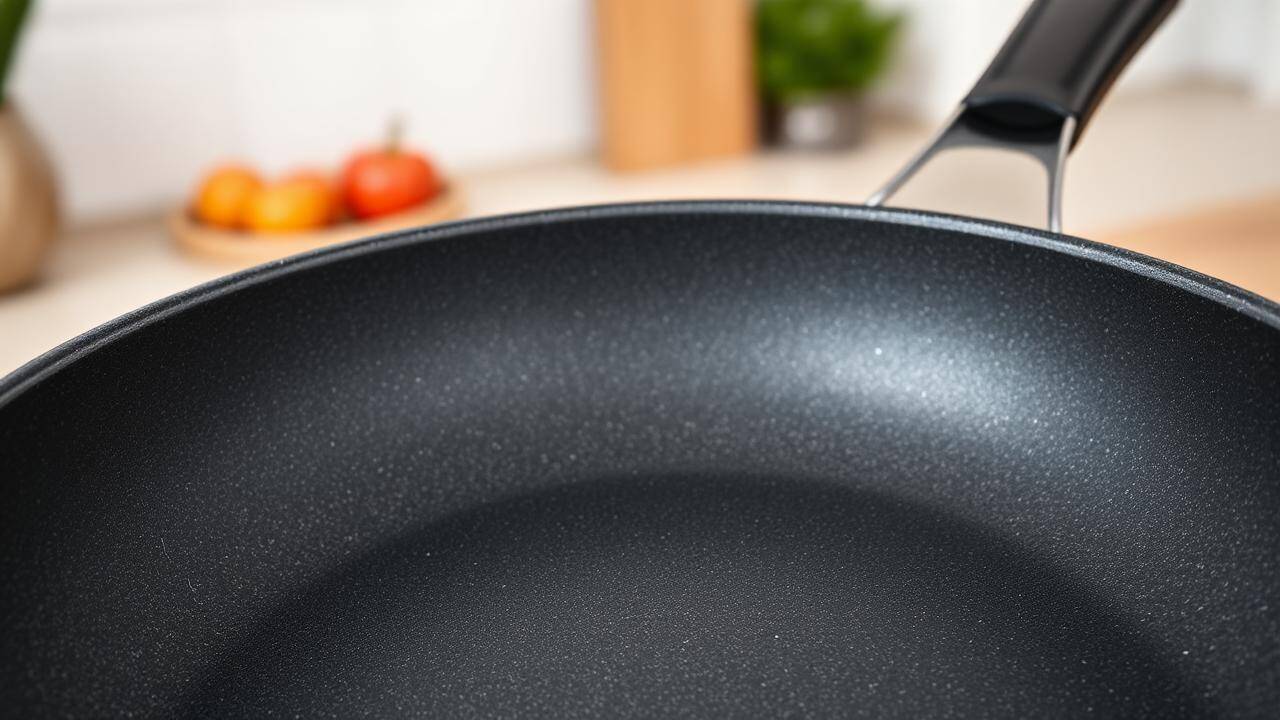
Ceramic pans wear out faster than traditional ones. Simple changes like using lower heat and soft cleaning tools can extend your pan’s life. Avoid metal utensils to prevent scratches.
The invisible micro cracks behind your non-stick pan failureThough there may still be something appealing in old-fashioned PTFE-coated cookware, they, too, cannot boast long lives in terms of their non-stick properties. One of their biggest weaknesses is their inability to withstand high temperatures due to the process of crazing.According to a study published in the journal Engineering Failure Analysis, high-temperature cooking causes the polymer matrix to undergo “thermal ageing.” This makes the coating brittle and leads to the formation of microscopic cracks. Once these cracks appear, food particles and oils wedge themselves inside, creating a “bridge” between the food and the pan. This is why a pan can look perfectly fine but still cause everything to stick.The research indicates that temperature causes brittleness in the coating; combined with regular wear, such as using metal utensils and abrasive pads, the coating will wear down more quickly. The combination of scraping away at a brittle coating is simply peeling away at the nonstick surface. Thermal cycling enhances the wearing process. Dipping a superheated skillet into cold water will speed up the cracking process even further.Three tips to extend the life of your skillet by two timesConsider the coating as an external layer. First, do not allow the pan to overheat. This type of coating performs well at lower and medium temperatures. For cooking foods that require extremely high heat, use stainless steel and cast-iron pans. The medium temperature prevents the development of crazing and sticking.Second, re-evaluate your cleaning kit. Even if a sponge says “non-scratch,” the mechanical pressure of vigorous scrubbing can eventually wear down the thickness of the coating. A soft cloth and mild dish soap are usually all that is needed if you clean the pan while it’s still slightly warm (but not hot).Finally, replace your cookware. Stainless steel is the sworn enemy of nonstick cookware; even slight abrasions from a stainless steel spoon will create areas where the coating begins to flake off. Silicone or wood utensils are the only way to go if you want to preserve your pan’s longevity. Adopting this strategy based on empirical evidence will allow you to put an end to your annual ritual of purchasing new cookware and savour the convenience intended by the design.
Source link